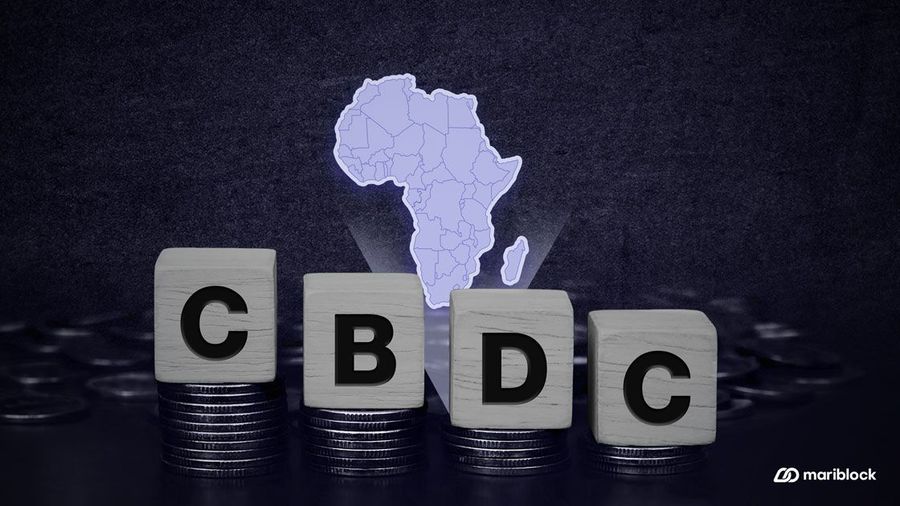

The Bank of Namibia (BoN) is exploring the issuance of a central bank digital currency (CBDC) to improve cross-border payments and expand financial inclusion.
The central bank has entered a preparatory phase ahead of a potential CBDC rollout, following a recent technical assistance mission with the International Monetary Fund (IMF).
The details
- According to reports, BoN’s director of strategic communications and international relations, Kazembire Zemburuka said the bank is studying to see how a CBDC can help financial inclusion in the country.
- He added that BoN’s CBDC efforts are greatly influenced by the IMF’s general recommendations for launching a CBDC.
- In its guide to countries looking to roll out digital versions of their local currencies, the IMF set forth a five-phase guideline — preparation, proof-of-concept, prototypes, pilot and production phases.
- The Bank of Namibia (BoN) is in discussions with central banks in Eswatini, Lesotho, and South Africa to assess the feasibility of a CBDC for cross-border payments between these nations.
The IMF recommendation
- Following its technical assistance mission to Namibia, the IMF advised that the country had no immediate need for a CBDC. While it supported the BoN's exploration efforts, it cautioned against an immediate rollout.
- In its February feasibility study report, the IMF advised Namibia to focus on enhancing its existing payment system rather than pursuing an immediate CBDC launch.
- It added that a retail CBDC does little to offer a unique solution to the country’s financial inclusion problems.
- Instead, it asked the country to focus on researching the potential of a digital currency to affect its monetary policy and financial stability.
- Zemburuka said the BoN is considering the IMF’s recommendation to help it finetune its approach towards the CBDC launch.
Key quote
- The IMF, in its technical assistance report, said:
“As the mission did not find a strong support for rCBDC issuance to address gaps in payments, it recommends against pursuing advanced technological exploration beyond proof-of-concept until tangible benefits of CBDC for payments are evident.”
- It added:
“Instead of developing a novel payment infrastructure such as rCBDC, the BoN could consider alternative solutions such as supporting measures or regulations to enhance financial inclusion.”
Before now
- Namibia first explored the idea of a digital Namibian dollar in 2022 with the release of a consultative paper on CBDCs.
- Beyond its collaboration with the central banks of Eswatini, Lesotho, and South Africa on CBDC cross-border use cases, little progress has been reported.
- Nigeria was the first African country to launch a CBDC — the eNaira — in 2021 albeit with little success recorded.
- In 2023, in a bid to stem the rapid devaluation of its local currency, the Reserve Bank of Zimbabwe launched a gold-backed digital currency as an alternative store of value to the Zimbabwean dollar.
- On its own end, Ghana says it plans to launch its CBDC — the eCedi — before the end of the year after it had held off on the launch for two years despite successful pilots.